Winter-Proof Your Car in Holbrook: 7 Steps to Prep Before the First Freeze
Holbrook’s late-September days can still feel warm, but desert temperatures drop quickly after sunset. Before the first freeze arrives, it’s worth giving your vehicle a careful pre-winter check.
Cold weather can expose problems that went unnoticed during the summer. A weak battery may struggle to start the engine. Low tire pressure can reduce traction. Old coolant may not provide enough freeze protection, while worn wipers and a weak defroster can make it difficult to see clearly.
This seven-step checklist will help you prepare your vehicle for colder mornings, winter road trips, and changing conditions around Holbrook and along I-40.
1. Check the Coolant and Antifreeze
Your cooling system does more than keep the engine from overheating in summer. The coolant mixture also protects the engine from freezing when temperatures fall.
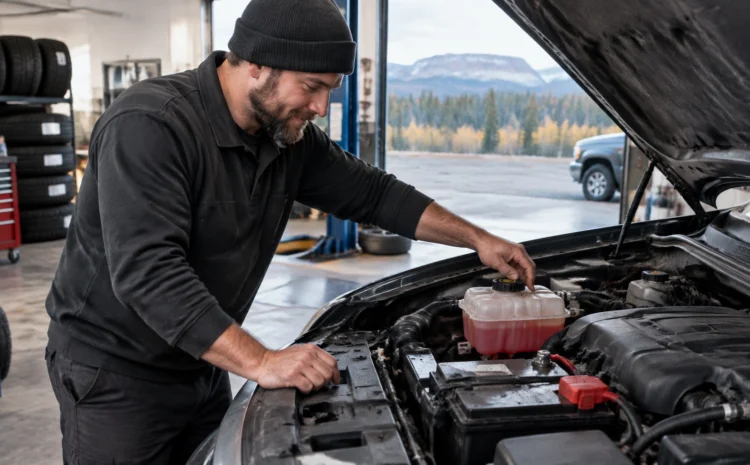
Check the coolant reservoir only when the engine is completely cool. The fluid should sit between the “low” and “full” marks. If the level is low, look for signs of a leak, such as a sweet smell, damp areas under the vehicle, or a reservoir that keeps losing fluid.
It’s also important to confirm that the coolant has the correct freeze protection. Many vehicles use a mixture close to 50% antifreeze and 50% distilled water, but the correct formula depends on the vehicle and the product already in the system. A technician can test the mixture and recommend a coolant service if the fluid is old, contaminated, or too weak.
Never remove a radiator cap while the engine is hot. Pressurized coolant can cause serious burns.
Arizona Department of Transportation recommends checking that your antifreeze can handle freezing temperatures before winter travel. You can review its winter vehicle preparation guidance before heading into colder areas.
2. Test the Battery Before It Leaves You Stranded
Cold weather does not necessarily cause all battery problems, but it can reveal a battery that was already weakened by Holbrook’s intense summer heat. High temperatures accelerate battery wear, and the first cold mornings may be when that reduced capacity becomes obvious.
Pay attention to warning signs such as:
- A slower-than-usual engine crank
- Interior or headlights that appear dim
- Corrosion around the battery terminals
- A swollen battery case
- Needing repeated jump-starts
Battery age matters, too. If your battery is several years old or you’ve noticed any starting trouble, have its condition checked before winter travel. A proper test can provide a better picture than simply checking whether the car starts today.
This is especially important if you drive long distances on I-40, make frequent early-morning trips, or travel through higher elevations where freezing temperatures and snow are more likely.
Macy’s Tire & Lube can help identify vehicle problems during routine maintenance and diagnostic work. You can also read our guide on how Arizona heat affects car batteries for more warning signs.
3. Replace Worn Wiper Blades and Check Washer Fluid
A clean windshield is essential when frost, road spray, dust, or blowing snow affects visibility. Wiper blades that worked adequately during summer may leave streaks, skip across the glass, or smear dirt when you need them most.
Inspect the rubber edge of each blade. Replace the blades if they are cracked, split, hardened, or pulling away from the frame. It’s also a good idea to lift the blades and clean away dust and grit from both the rubber and windshield.
Top off the washer reservoir with a fluid designed for colder temperatures. Regular summer washer fluid may not perform well during a freeze. Do not use plain water as a substitute, since it can freeze inside the reservoir, lines, or spray nozzles.
While checking visibility, turn on all headlights, brake lights, taillights, and turn signals. Clean cloudy lenses and replace any bulbs that are not working.
4. Check Tire Pressure and Tread Depth
Your tires are the only part of your vehicle touching the road, so they deserve special attention before cold weather arrives.
Check tire pressure when the tires are cold, preferably before driving or after the vehicle has been parked for several hours. Use the pressure listed on the driver’s door-jamb sticker or in the owner’s manual: not the maximum pressure printed on the tire sidewall.
As the temperature drops, tire pressure usually drops as well. A common rule of thumb is about 1 PSI for every 10-degree temperature change, although the exact change depends on the tire and conditions. Check your pressure regularly as nights get colder, and don’t forget the spare.
Next, inspect the tread and sidewalls. Look for:
- Uneven wear
- Cracks or dry rot
- Bulges
- Nails or other embedded objects
- Tread that is worn close to the indicator bars
You can use the penny test as a quick warning check, but a professional tread-depth measurement is more precise. If your tires are worn or damaged, Macy’s Tire & Lube offers new and quality-inspected used tires from leading brands.
A tire rotation or alignment check may also be worthwhile if the tread is wearing unevenly, the steering wheel is off-center, or the vehicle pulls to one side. Our tire safety guide covers several checks you can make before driving longer distances.

5. Test the Heater and Defroster
A working heater keeps you comfortable, but the defroster is a safety feature. It helps clear condensation, frost, and fog from the windshield so you can see the road.
Start the vehicle and allow it to reach normal operating temperature. Then test the heater on different settings. It should produce warm air and provide consistent airflow. Switch to the front defroster and check whether air reaches the windshield effectively. If your vehicle has a rear defogger, test that as well.
Weak heat, poor airflow, or a windshield that stays fogged may point to issues involving the thermostat, coolant level, heater core, blower motor, or cabin air filter. These problems are easier to address before the first freezing morning rather than when you’re already late for work.
If the cabin air filter is clogged, airflow may be reduced and the inside of the windshield may be harder to clear. A technician can inspect the system and help determine what needs attention.
6. Have the Brakes Inspected
Winter conditions can make stopping more difficult, particularly on wet, icy, or snow-covered roads. Your brakes should be checked if you hear squealing or grinding, feel vibration through the pedal, or notice that the vehicle pulls while braking.
A pre-winter brake inspection should include the pads, rotors, brake lines, and fluid condition. Also pay attention to dashboard warning lights, including the brake, ABS, and traction-control indicators. These lights should not be ignored before winter driving.
You don’t have to wait for a serious noise to appear. Brake components wear gradually, and catching a problem early may help prevent a more expensive repair later. A safety inspection at a local auto repair shop in Holbrook can help you understand what needs immediate attention and what can be monitored.
7. Pack an Emergency Kit
Even a well-maintained vehicle can experience a flat tire, dead battery, or unexpected delay. An emergency kit gives you more options if you become stranded or road conditions change.
Keep these items in your vehicle:
- Fully charged phone and vehicle charger
- Drinking water and nonperishable snacks
- Warm coat, blanket, gloves, hat, and extra socks
- Flashlight with spare batteries
- First-aid kit and necessary medication
- Jumper cables or a portable jump starter
- Ice scraper
- Tire gauge and properly inflated spare
- Reflective triangles or road flares
- Small tool kit
- Sand or kitty litter for traction
- Folding shovel if you expect to travel through snowy areas
Before heading out of town, check road conditions and let someone know your route. Arizona’s AZ511 travel information service provides updates on weather, closures, and road conditions.
Get Your Vehicle Ready Before the Cold Arrives
Winter preparation does not need to be complicated. A coolant check, battery test, fresh wipers, properly inflated tires, reliable heat, strong brakes, and a stocked emergency kit can make a major difference when temperatures fall.
While you’re preparing, it’s also a good time to review your maintenance schedule. If you’re due for an oil change near me, fluid check, belt inspection, tire service, or general diagnostic review, combining those tasks can save you a second trip.
Macy’s Tire & Lube is a trusted local auto shop in Holbrook, AZ, serving everyday drivers, families, road-trippers, and travelers passing through the area. With fast, affordable service and 35 years of combined expertise, our team can help you get ready for winter without unnecessary hassle.
If you’re searching for an auto repair shop near me, visit us at 317 W. Hopi Dr. in Holbrook, book an appointment, or call 928-524-6838. A quick pre-winter check now can help you start the colder season with greater confidence.