
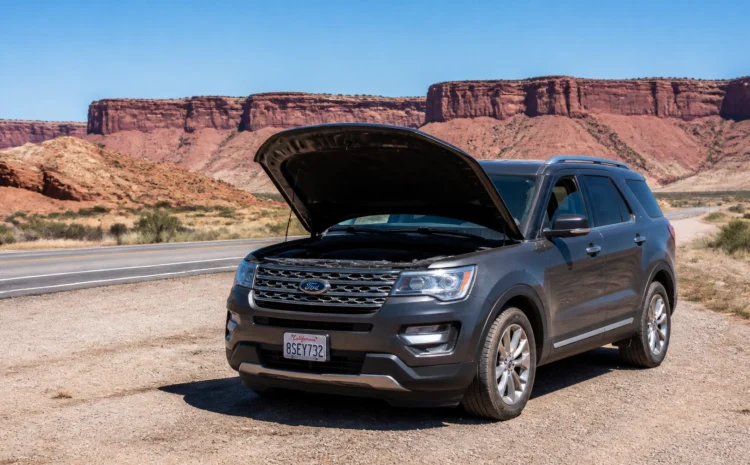
Is Your Battery Dying? Why Arizona Heat Is Your Car’s Biggest Enemy in July
Most drivers associate battery trouble with the dead of winter. We’ve all seen the classic movie scene: a character is rushing to escape a blizzard, turns the key, and gets nothing but a pathetic click-click-click. While extreme cold definitely makes it harder for an engine to turn over, it isn’t actually the primary “killer” of car batteries. In reality, the true villain of the automotive world is the sweltering July heat we experience right here in Holbrook, Arizona.
While winter might be when a weak battery finally gives up the ghost, summer is when the damage is actually done. If you’ve ever left a piece of fruit out on a July afternoon and watched it shrivel in a matter of hours, you have a pretty good idea of what’s happening inside your car’s battery box. The intense heat of the high desert doesn’t just make your commute uncomfortable; it fundamentally alters the chemistry of your vehicle’s power source.
The Science of the Sizzle: Why Heat Kills Batteries
To understand why July is so brutal on your car, we have to look under the hood, literally. Your car battery is essentially a plastic box filled with lead plates and a liquid mixture of water and sulfuric acid, known as electrolyte. This mixture creates a chemical reaction that generates the electricity needed to start your car and keep the lights on.
When the temperature outside climbs into the 90s and 100s, the environment under your hood becomes an oven. It isn’t uncommon for temperatures under a car’s hood to reach 140°F or higher while driving or sitting in a parking lot. This extreme heat triggers two main destructive processes:
1. The Evaporation Factor
Think of your battery like a pot of water on a stove. Even if you aren’t “boiling” the liquid, a steady heat will cause that water to evaporate over time. In a car battery, the liquid electrolyte begins to evaporate when exposed to sustained Arizona heat. As the liquid level drops, the lead plates inside are exposed to the air. This leads to permanent damage and significantly reduces the battery’s ability to hold a charge. Once those plates are “cooked” by the sun, there is no way to bring them back to life.
2. Accelerated Internal Corrosion
Heat acts as a catalyst for chemical reactions. In the world of batteries, it speeds up the internal corrosion of the lead plates. This isn’t just surface rust; it’s a deep, structural breakdown that eats away at the battery’s capacity from the inside out. For every 15-degree rise in temperature, the life of a typical lead-acid battery is effectively cut in half. While a battery in a milder climate like Oregon might last five or six years, a battery living through Holbrook summers often struggles to make it past three.
Why Holbrook Drivers Experience This Differently
Living in Holbrook means we deal with a unique set of driving conditions. We aren’t just dealing with the heat; we’re dealing with the geography of the I-40 and the vast distances of Northern Arizona.
If you are a local resident, your daily routine might involve several short trips across town: running to the store, dropping the kids off, or heading to work. These short trips are surprisingly hard on a heat-stressed battery. Your alternator needs time to replenish the energy used to start the engine. When the battery is already struggling with internal fluid loss, those short bursts of driving never quite give it the “full meal” it needs to stay healthy.
For those passing through on a long-distance road trip, the heat is an even bigger threat. Sustained high-speed driving in 100-degree weather puts an immense load on the entire electrical system. Your battery isn’t just sitting there; it’s being bombarded by heat from the engine and the pavement while simultaneously trying to power your A/C at full blast and charge multiple phones or GPS devices. This is why we often see travelers stranded at gas stations near the highway: their battery was on its last legs, and the July heat finally pushed it over the edge.

Warning Signs You Shouldn’t Ignore
Unlike a flat tire, which is obvious the moment you see it, a dying battery is often a “silent” problem until the moment it fails completely. However, if you pay close attention, your car will usually try to tell you that it’s struggling. Here are the most common signs that the Arizona sun is winning the battle:
- The “Slow Crank”: When you turn the key or push the start button, does the engine sound sluggish? If it takes an extra second or two to roar to life, that’s a major red flag.
- Dimming Lights: If your headlights seem a bit yellow or dim when you’re idling at a stoplight, but brighten up when you hit the gas, your battery is likely struggling to maintain a consistent voltage.
- A “Funky” Smell: If you notice a scent similar to rotten eggs coming from under the hood, your battery may be off-gassing due to overheating or overcharging. This is a sign of a serious internal chemical issue.
- Visual Distortions: Take a peek at the battery case. Is it perfectly rectangular, or does it look slightly swollen or bloated? Heat can cause the plastic casing to expand, which is a clear indicator that the battery has been through some extreme temperature cycles.
- Corrosion Buildup: If you see white, ashy, or bluish-green crust around the metal terminals, that’s a sign that acid is leaking or evaporating. This “crust” creates resistance, making it even harder for the battery to do its job.
If you notice any of these symptoms, it’s a good idea to look into automotive repair services in Holbrook, AZ before you find yourself stuck in a parking lot.
Simple Steps to Protect Your Battery This Summer
You can’t change the weather, but you can change how you treat your vehicle. A little bit of prevention goes a long way toward making sure you aren’t the one looking for a jump-start in the middle of July.
Seek Out the Shade
It sounds simple, but parking in the shade can lower the temperature under your hood by dozens of degrees. If you have a garage, use it. If you’re heading to the store, look for a spot under a tree or in the shadow of a building. Every degree you shave off that internal temperature extends the life of your battery.
Keep the Terminals Clean
The “crust” we mentioned earlier acts as an insulator, preventing electricity from flowing freely. You can often clean this yourself with a mixture of baking soda and water and a stiff brush, but be careful not to touch the metal terminals with your bare hands. Clean connections mean your battery doesn’t have to work as hard to send power to your starter.
Limit “Engine-Off” Accessory Use
We’ve all done it: sitting in the car with the engine off while listening to the radio or waiting for a friend. In the winter, this is less of a risk. In the July heat, however, your battery is already stressed. Drawing power from it without the engine running to recharge it can be the “final straw” that leads to a dead cell.
Get a Professional Test
Most people wait until their battery is dead to replace it. In Arizona, that’s a risky game. We recommend having your battery tested at least twice a year: once before the summer heat hits and once before the winter chill. A professional test can tell you exactly how much “life” is left in the battery, allowing you to replace it on your own schedule rather than in an emergency situation. For more tips on preparing for the road, check out our tire safety tips for long road trips.
Professional Battery Testing at Macy’s Tire & Lube
At Macy’s Tire & Lube, we’ve seen it all. With 35 years of combined expertise, we understand the specific toll that the Holbrook climate takes on vehicles. We don’t want you to be stranded on the side of the I-40 or late for work because of a preventable battery failure.
When you come in for a regular oil change, we can easily perform a quick diagnostic on your battery. Our advanced testing equipment checks the “Cold Cranking Amps” (CCA) and the overall health of the cells. If your battery is nearing the end of its life, we can help you find a replacement that is specifically designed to handle high-heat environments.
We pride ourselves on being your trusted partner in vehicle maintenance. We won’t try to sell you something you don’t need, but we will give you the honest truth about whether your battery is ready for another month of 100-degree days.
Conclusion
The Arizona summer is beautiful, but it is undeniably tough on our cars. While we often focus on keeping ourselves cool with air conditioning and ice-cold water, your battery is under the hood doing the heavy lifting in much harsher conditions. By keeping an eye out for the warning signs and taking a few preventative steps, you can keep your vehicle running smoothly all through the hottest months of the year.
Don’t wait for the “click-click-click” of a dead battery to take action. If your car has been starting a little slower lately, or if your battery is more than three years old, come see us. We’ll get you tested, checked, and back on the road in no time.
Ready for a quick health check for your vehicle? Contact us today or stop by Macy’s Tire & Lube in Holbrook to make sure your battery is ready to beat the heat.