Tire Rotation vs. Wheel Alignment: Which One Does Your Car Actually Need?
Tire rotation and wheel alignment both help your tires wear evenly, but they solve different problems. A rotation moves tires to different positions on your vehicle. An alignment adjusts the angles of the wheels so they point and track as they should.
Because the services are often mentioned together, it’s easy to assume one can replace the other. It can’t. Think of rotation as changing which shoes take the most steps, and alignment as correcting the way your feet point when you walk. Depending on your vehicle and the signs you notice, you may need either service, or both.
What a tire rotation does
During a tire rotation, a technician moves each tire to a different position on the vehicle. The exact pattern depends on the vehicle and the tires, so the owner’s manual is the best guide. Some tire setups limit which positions are appropriate.
Tires don’t all wear at the same rate. Front tires may do more work during steering, while tires on the drive wheels handle the force that moves the vehicle. Rotation helps spread that work around rather than letting one pair wear out much sooner than the other.
For many vehicles, a useful rule of thumb is to rotate tires every 5,000–7,000 miles. Check your owner’s manual for the schedule that suits your vehicle, and ask a technician if your tires have a directional tread pattern or different sizes front and rear.
Rotation is one of the simplest, least expensive ways to help get more life from your tires. The tire rotation cost is modest compared with replacing a set of tires, especially when the service is performed regularly and uneven wear is caught early.
What a wheel alignment does
A wheel alignment is not a tire-moving service. It’s a measurement and adjustment of suspension angles that affect how your wheels sit and point in relation to the vehicle and road. The main angles are camber, caster, and toe.
- Camber is the inward or outward tilt of a wheel when viewed from the front.
- Caster is the angle of the steering axis when viewed from the side; it helps with steering stability and the wheel’s return toward center.
- Toe describes whether the wheels point slightly inward or outward when viewed from above.
These angles work together to help your vehicle track straight and let the tires meet the road properly. A small change can be hard to spot by eye but still affect handling or wear. For a deeper explanation, see our guide to camber, caster, toe, and tire-wear patterns.
Unlike rotation, alignment usually isn’t needed at a fixed mileage interval. It’s worth having the alignment checked when you notice symptoms, after a hard pothole or curb impact, or following relevant steering or suspension work.
Which one do you need? Start with the symptoms
Your tires and steering can offer useful clues, though symptoms sometimes have more than one cause. A quick guide:
- Tread is wearing more along the inner or outer edge: Ask about an alignment check. Incorrect wheel angles can make one edge scrub against the road.
- One pair of tires is wearing faster than the other pair: A rotation may help distribute wear, if it’s due and permitted for your tire setup. A technician should also look for other causes of uneven wear.
- The vehicle pulls to one side or the steering wheel sits crooked while driving straight: An alignment check is a good next step. Tire pressure differences or other vehicle issues can also affect how a car tracks.
- The steering wheel or vehicle vibrates: Don’t assume alignment is the cause. A wheel that needs balancing, tire damage, or a suspension concern can also create vibration.
A rotation can help even out wear from one position to another, but it won’t correct wheels that point the wrong way. An alignment can correct wheel angles, but it won’t move a worn front tire to the rear. That’s why identifying the symptom matters.

Why you may need both
Rotation and alignment address separate parts of tire care, but they complement each other. If you rotate tires on schedule while the wheels are misaligned, the tires may continue to wear unevenly. If you correct alignment but skip rotations, differences in wear between tire positions may still build over time.
A tire inspection during a rotation can also reveal patterns that deserve a closer look. If one tire has more wear on an edge, for example, the technician can recommend checking the alignment rather than simply moving the tire and hoping the issue goes away.
When you buy new tires, it’s sensible to ask for an alignment check. New tires are a bigger investment than routine maintenance, and checking that the wheels track properly can help protect that investment. An inspection doesn’t automatically mean an adjustment is needed; it helps determine whether the angles are within the vehicle’s specifications.
What about potholes, curbs, and local roads?
A significant pothole or curb strike can affect steering or suspension components and may change alignment. If you’ve had a hard impact and your vehicle starts pulling, the steering wheel is no longer centered, or you notice unusual tire wear, arrange an inspection.
On high-desert roads, changing conditions and temperature swings are good reminders to pay attention to your tires and handling. A temperature change alone doesn’t prove the wheels are misaligned, but new pulling or an off-center steering wheel is worth checking. If you’re traveling along I-40 or Route 66, don’t ignore a sudden change in how your vehicle tracks.
Understanding the wheel alignment cost
The wheel alignment cost depends on your vehicle and the adjustments it needs. Rather than choosing based on a quote alone, consider what an alignment check can help you catch: if the wheels are out of specification, continued uneven wear could shorten the life of a much more expensive set of tires.
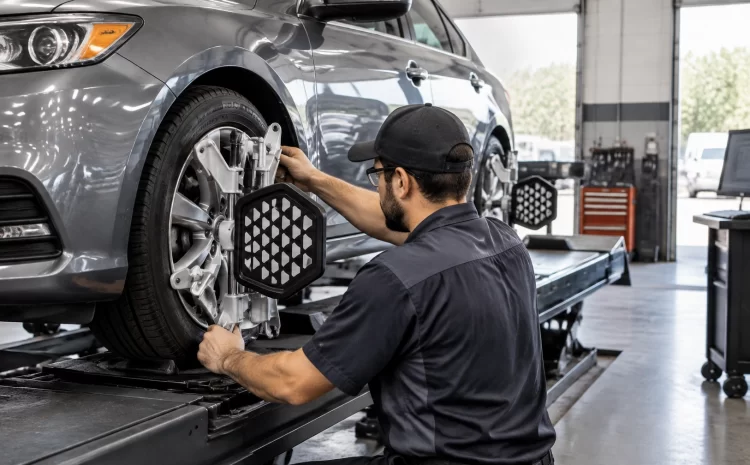
At Macy’s Tire & Lube, we offer wheel alignments using advanced technology, along with tire rotations and repairs. Our pricing is competitive and designed to beat bigger-city prices, without inventing a one-size-fits-all figure for every vehicle.
Whether you’re looking for a wheel alignment near me or comparing tire shops near me in Holbrook, Arizona, it helps to choose a shop that can look at the full picture: tire wear, how the car tracks, and the service history you share.
Get a clear recommendation for your vehicle
Macy’s Tire & Lube has 35 years of combined expertise and aims to get customers in and out without a long wait. If your tires are due for rotation, your vehicle is pulling, or you’ve just purchased new tires, we can help you understand which service makes sense for your situation.
Visit us at 317 W. Hopi Dr., Holbrook, AZ 86025, or call 928-524-6838. You can also learn more about our tire and wheel alignment services or contact Macy’s Tire & Lube to plan a visit. We’ll help you get a straightforward answer and keep your tires ready for the road.